Micro pieces of plastic are doing more damage than meets the eye

Jon Sumple • September 18, 2018

Negligence is not a justifiable defense for reckless and profit-driven decisions when it comes to a decades-long reliance on petroleum-derived plastics. 


Pictures speak volumes. And new and disturbing studies point to the devastating effects plastics have on our planet. 


One such report — Ingested Micronizing Plastic Particle Compositions and Size Distributions within Stranded Post-Hatchling Sea Turtles — was released in August 2018 detailing plastic’s impact on loggerhead turtles along the South Florida coastline. The study was conducted by the University of Georgia (UGA) and the Loggerhead Marinelife Center (LMA), and was funded in part by the RWDC Environmental Stewardship Foundation , which has partnered with the University of Georgia’s New Materials Institute to research and develop bio-based , fully biodegradable plastics. 


“The partnership between our foundation and UGA is vital in so many ways,” says Dr. Daniel Carraway, CEO of RWDC, Industries, LLC, and (title) of the RWDC Environmental Stewardship Foundation. “It illustrates a need for truly biodegradable polymers to replace petroleum-derived plastics immediately. Working with UGA in both environmental studies and the development of products that will change the world is important and rewarding work.” 


Companies have long claimed their plastics are biodegradable, but are they really? Even if a plastic degrades to a micro size, does that mean it is biodegradable? 


Absolutely not, as the UGA and LMA study clearly indicates. 


According to the report, plastic is the most common form of marine debris. Globally, at least 690 marine species, including sea turtles, seabirds, seals, sea lions, whales, fish and invertebrates, have reportedly become ill or died following entanglement in or ingestion of marine plastics. 


And the ingestion of micro-sized plastic particles is killing marine life. 


During the study, 96 post-hatchling sea turtles were collected after washing back onto Florida beaches between Vero Beach and Lake Worth. Nearly half of the recovered turtles were rehabilitated by LMC and released back into the ocean. During their time in rehabilitation, all turtles passed some amount of plastic. The remaining turtles died, and 27 of were examined for the study, with 93 percent having some amount of ingested plastic particles in their systems, leading the team to surmise that “many died due to blockages or nutritional deficiencies associated with plastic ingestion.” 


“This is unacceptable in today’s modern world,” says Dr. Carraway. “We need to care more about the environment in which we live, and we must commit to replacing traditional plastics with bio-based, biodegradable polymers that have no impact whatsoever on creatures we share the planet with. RWDC is committed to transformational environmental change. Now. It’s time.” 


December 19, 2025
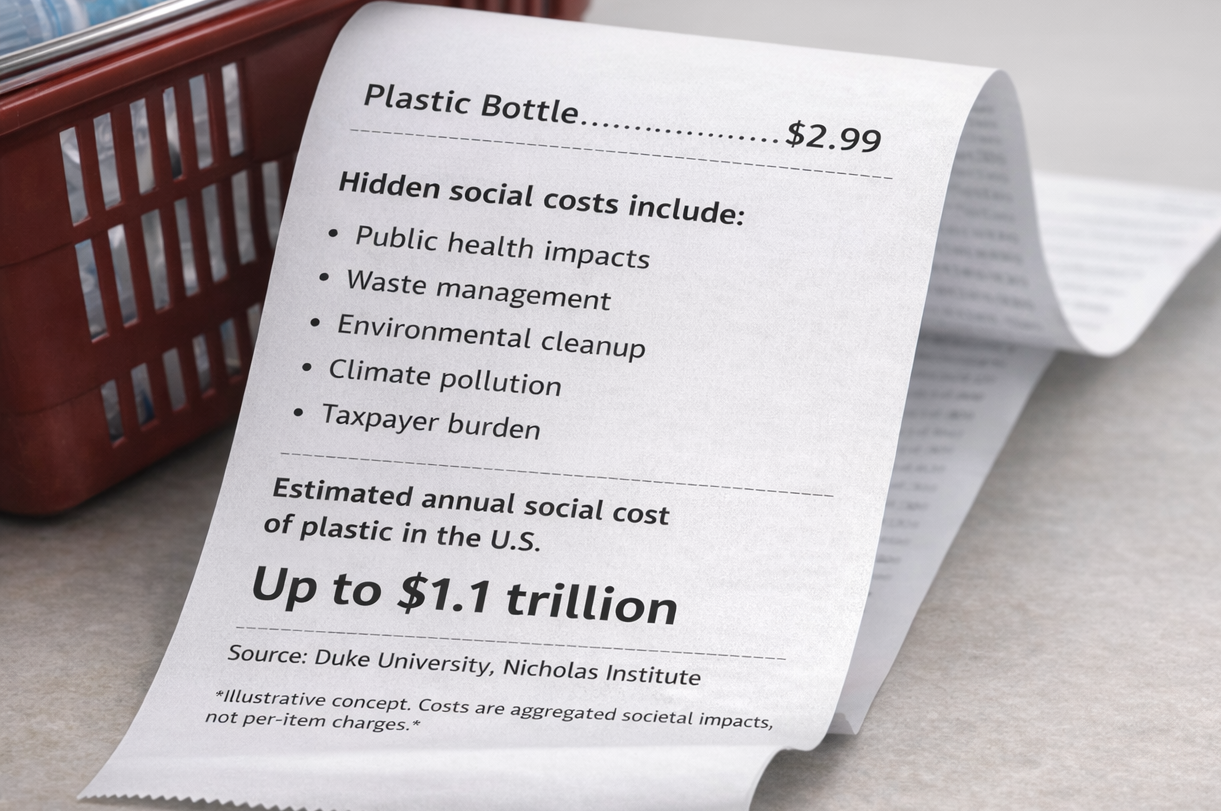
Plastic is often described as cheap, convenient, and efficient. At checkout, it looks that way. But new research makes clear that plastic is only cheap because its real costs are being paid somewhere else. A recent report from Duke University’s Nicholas Institute for Energy, Environment and Sustainability estimates that the social cost of plastic in the United States alone reaches as high as $1.1 trillion every year . That figure reflects the accumulated impacts of plastic across its entire lifecycle, from fossil fuel extraction and manufacturing to public health, environmental damage, waste management, and climate pollution. The researchers emphasize that this estimate is likely conservative, noting significant data gaps that make it difficult to fully capture plastic’s true toll. A Broader Way to Account for Plastic’s Impact This concept of “social cost” reframes the plastic conversation. It moves the issue beyond recycling rates and litter and toward a more honest accounting of who ultimately pays. The price printed on a product does not include the health care costs associated with toxic exposure, the taxpayer dollars spent managing plastic waste, or the long-term environmental damage linked to plastic production and disposal. That message came through clearly in a recent episode of NRDC’s What the Earth? where Margie Kelly spoke with Renée Sharp, NRDC’s director of plastics and petrochemical advocacy. Sharp connected the Duke findings to everyday life in direct terms. “Plastic is fake cheap,” Sharp said. “It looks cheap. It seems cheap. It is not cheap. The real costs show up in our health, our communities, and our environment.” The Duke report puts numbers behind that statement. Health related impacts account for a significant portion of the estimated cost, including increased disease burden, lost productivity, and premature deaths linked to pollution and chemical exposure. Environmental contamination, climate emissions from fossil fuel-based plastics, and the cost of cleanup and waste management add hundreds of billions more. When Plastic Pollution Becomes Personal What makes this moment different is where the science is now pointing. Researchers have detected microplastics in human blood, lungs, placental tissue, arterial plaque, and brain tissue. Plastic pollution is no longer something that exists only in oceans or landfills. It is now inside the human body. Sharp addressed that shift directly in the interview, noting that people did not consent to this exposure. Plastic was marketed as a miracle material, she explained, without any warning that it would fragment into microscopic particles that end up in our air, water, food, and organs. This growing body of evidence is changing how plastic is perceived across political and cultural lines. Public concern is expanding beyond aesthetics and waste toward human health and long-term societal cost. The Duke analysis provides policymakers, businesses, and communities with a framework to evaluate plastic not by convenience alone, but by its real impact on people and systems. If plastic were priced honestly, the market would look very different. Until then, understanding the social cost of plastic is a critical step toward safer materials, smarter policy, and choices that put human health first.
November 21, 2025
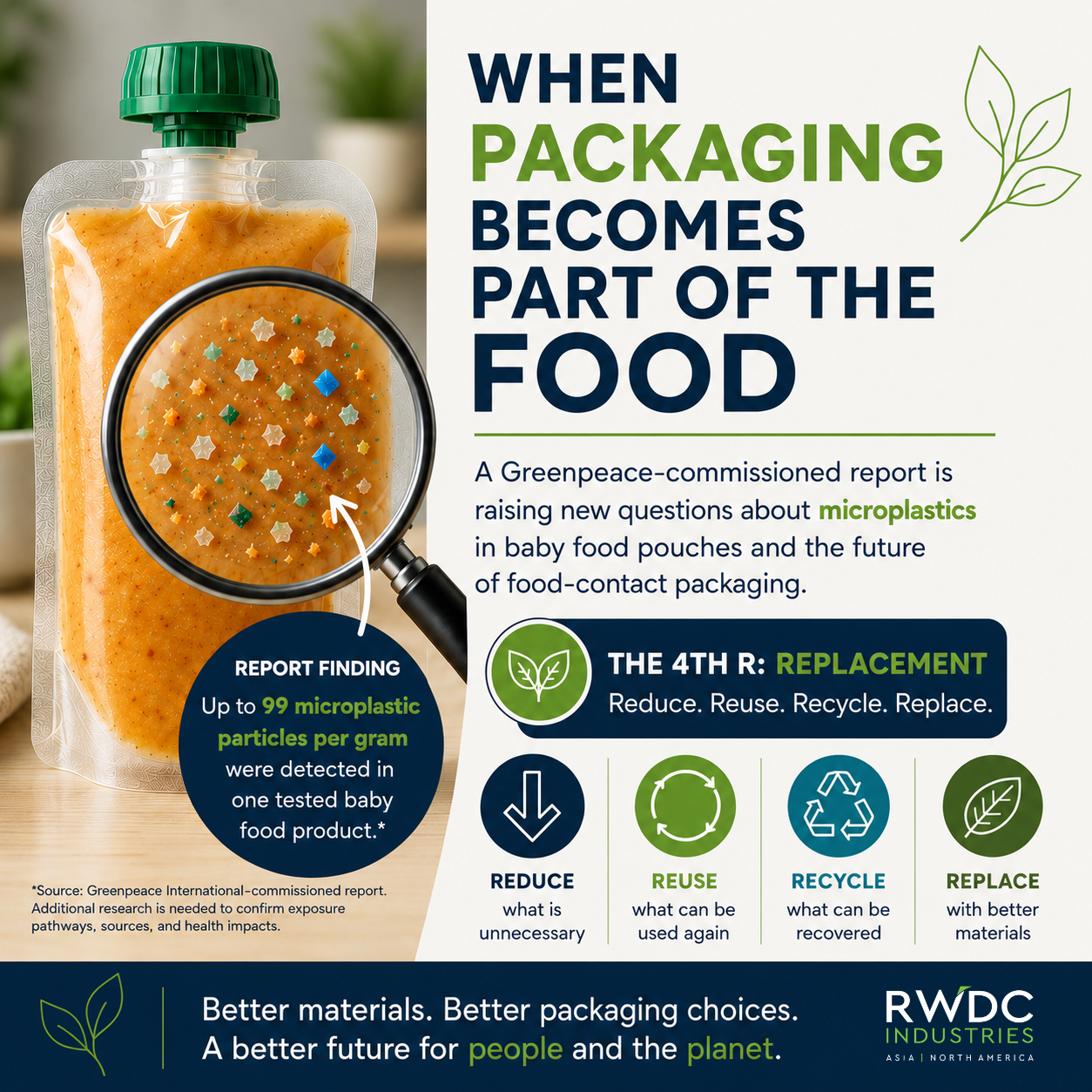
Another major report on microplastics just landed in California, and it underscores exactly why RWDC exists. The products people use every day are shedding microscopic plastic particles into the air we breathe and the food we eat. The solution isn’t more filters, warnings, or end-of-life fixes. It’s better materials, designed from the start to protect human health. Another Day, Another Disturbing Report California’s Department of Toxic Substances Control (DTSC) released its latest overview of microplastics in consumer products, and the findings confirm what researchers, health advocates, and early movers like RWDC have been emphasizing for years: exposure isn’t occasional, incidental, or tied to a single product category. It’s structural. It’s routine. And it’s happening inside homes, schools, restaurants, and workplaces every day. The report tracks how familiar items shed microplastics through ordinary use. Baby bottles made from polypropylene release particles when heated or shaken during formula preparation. Plastics used in food packaging — from beverage bottles and caps to cling films, snack wrappers, and polystyrene takeout containers — shed microplastics under heat, friction, and simple mechanical stress. Children’s toys, especially slimes, foams, polymer clays, and glitter-based products, transfer primary microplastics to hands, surfaces, and mouths. Even products most people never consider contribute to this ongoing cycle. Water-based interior paints release microplastics when brushes and rollers are washed out, and dried paint layers shed particles into indoor dust over time. Detergents and fabric softeners rely on polymers and fragrance microcapsules that persist through wastewater treatment and travel into waterways. Agricultural plastic film mulch breaks down directly into soil, affecting everything from microbial communities to crop health. When these pathways converge, the picture becomes impossible to dismiss: microplastics flow into our environment, and our bodies, because the materials at the foundation of consumer products were never designed with human health in mind. They were designed for convenience, cost, and scale. RWDC: Built to Change the Game The encouraging element in DTSC’s findings is its acknowledgment that alternatives already exist. Glass, stainless steel, cellulose, mineral-based materials, paper systems, and genuinely biodegradable biopolymers, including PHA, offer realistic, high-performance options that do not leave behind persistent particles. These are not hypothetical materials. They are commercially viable today. What’s needed now is commitment — from regulators, manufacturers, and brands who understand that the era of microplastic-dependent product design is ending. California’s report will influence which products are designated as “Priority Products,” triggering reformulation requirements and accelerating the shift to safer materials. Globally, the movement is already gaining traction, with the European Union phasing out several categories of intentionally added microplastics by 2029. Time for Action The momentum is real. The science is clear. And the opportunity is enormous. Microplastic exposure may be a daily reality, but it doesn’t have to be our future. RWDC is leading the shift toward materials that protect human health and return safely to the earth. It’s the only path forward where the products we rely on add value to our lives without leaving a permanent trace.
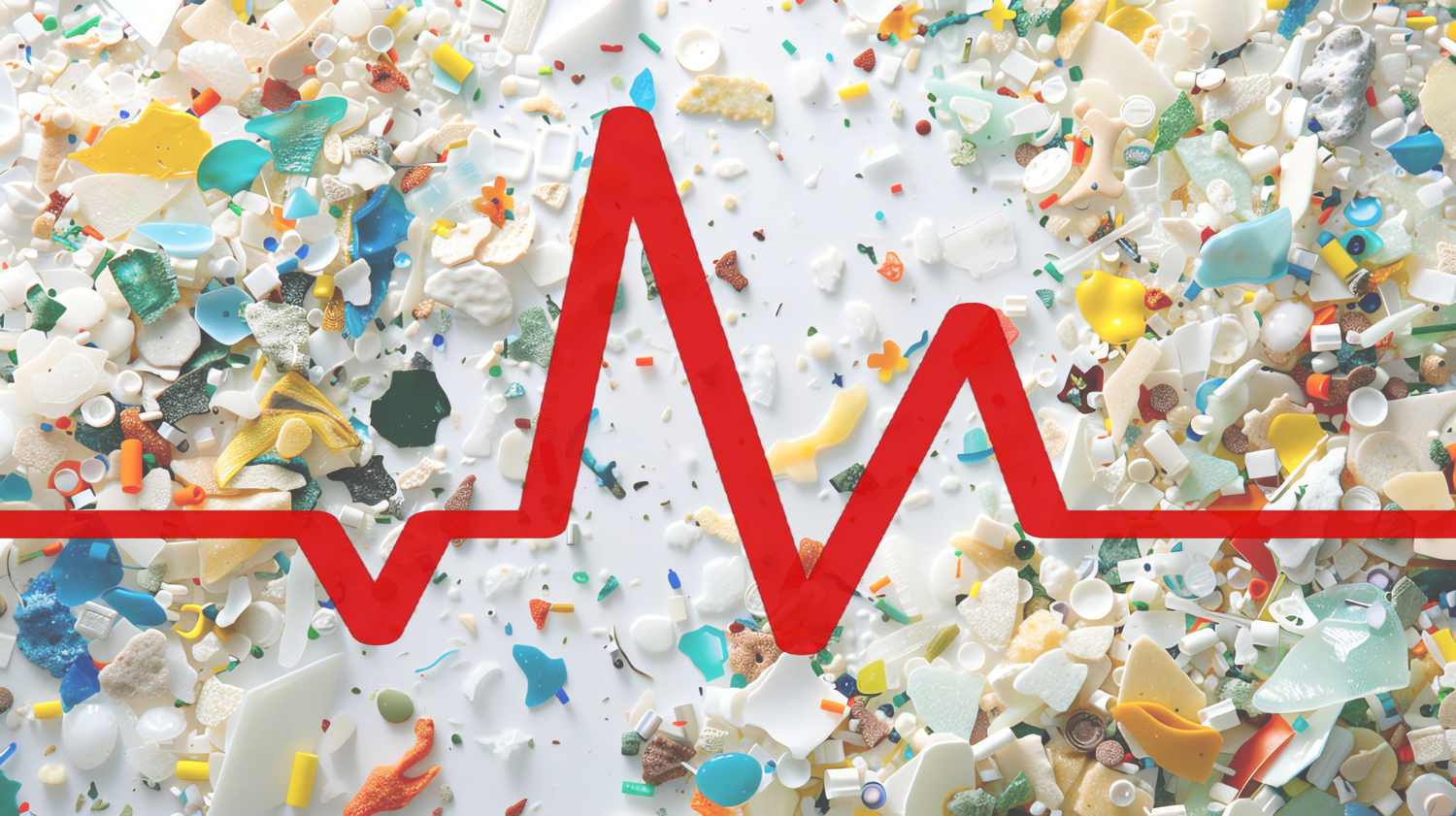
EKG Heartbeat line over thousands of pieces of microplastics
February 10, 2025
Recent groundbreaking research published in the New England Journal of Medicine has revealed a disturbing connection between microplastics and cardiovascular health. The study found that patients with microplastics in their arterial plaque faced 4.5 times higher risk of heart attack, stroke, or death compared to those without plastic particles present. This research, conducted in Italy, examined plaque removed from 257 patients' carotid arteries. A striking 58% of samples contained measurable amounts of polyethylene and polyvinyl chloride - common plastics found in everyday items. These findings underscore the urgent need for alternatives to traditional plastics that won't break down into harmful microplastics. Path Forward As Dr. Philip Landrigan noted in his editorial accompanying the study, "inaction is no longer an option." The evidence is clear: The convenience of traditional plastics comes at a cost far higher than previously understood . The development of truly biodegradable materials has become crucial for both environmental and human health. Commitment to Change At RWDC Industries, we're addressing this critical health and environmental challenge through innovative PHA (Polyhydroxyalkanoate) technology. Unlike traditional plastics that fragment into harmful microplastics, PHA completely biodegrades in natural environments, leaving no toxic trace. Working with global brand owners, we're developing PHA-based materials that meet the rigorous standards of consumer products while ensuring environmental and human safety. Our commitment goes beyond creating eco-friendly alternatives – we're working to eliminate the very source of microplastic pollution. Through innovation and commitment to sustainability, we're helping create a future where plastic pollution – and its health implications – are a thing of the past.
June 5, 2024
Strategic investment accelerates development of the first commercial-scale PHA facility, driving global adoption of eco-friendly plastics to mitigate environmental and health concerns
May 15, 2024
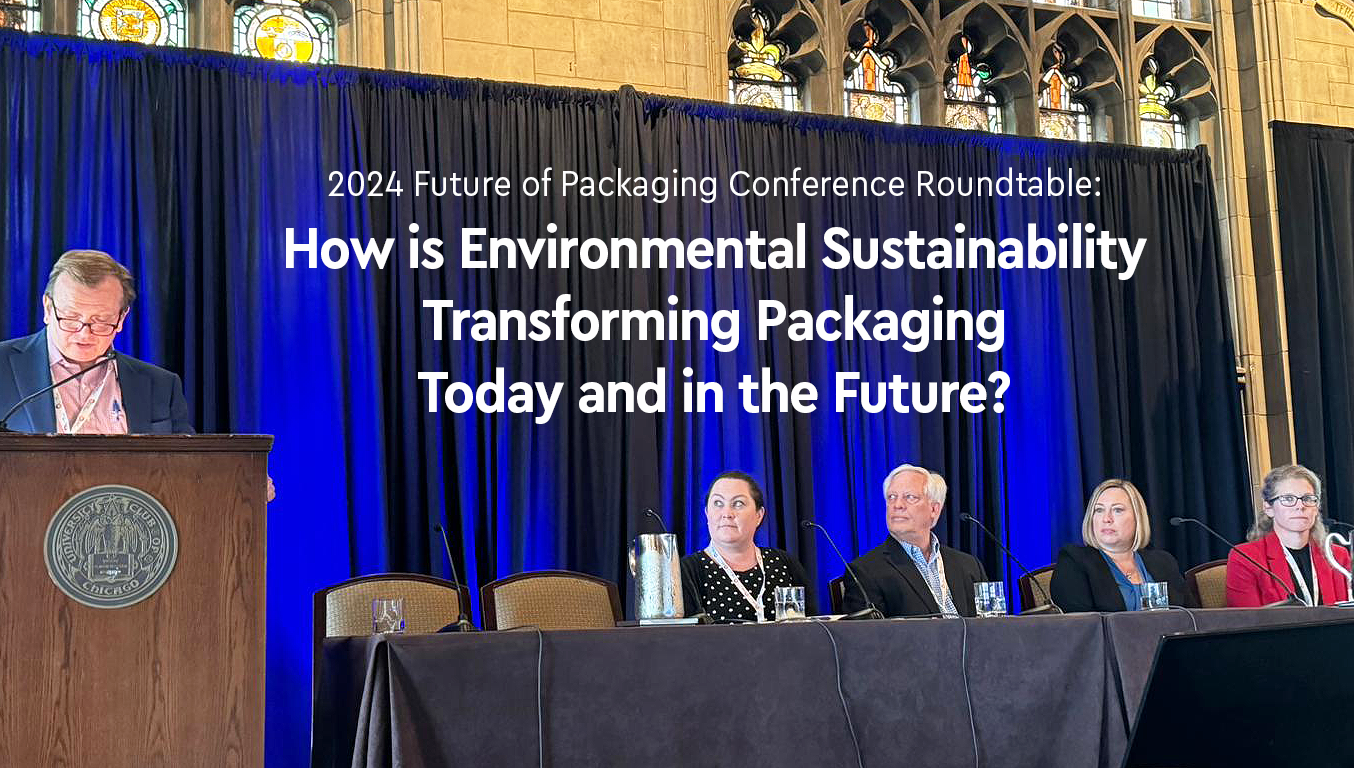
Dr. Daniel Carraway, Co-Founder and CEO of RWDC Industries, recently participated in the "How is Environmental Sustainability Transforming Packaging Today and in the Future?" panel at the Future of Packaging Conference. The panel discussion focused on the urgent need to address the global microplastics problem and the role of sustainable packaging solutions in mitigating the environmental impact of plastic pollution. During the panel, Dr. Carraway emphasized that while recycling is an important aspect of managing plastic waste, it alone is not sufficient to solve the crisis. In fact, recent studies have shown that recycling processes can contribute to the generation of microplastics, which can then enter the environment and pose significant risks to human health and ecosystems. Dr. Carraway highlighted the potential of PHA (polyhydroxyalkanoates) as a game-changing solution for replacing petroleum-based plastics. PHA is a 100% natural, biodegradable polymer that can be used to create a wide range of packaging products, from rigid containers to flexible films. Unlike traditional plastics, PHA can biodegrade in various environments, including soil, water, and marine settings, without leaving behind harmful residues. The panel also discussed the importance of collaboration among stakeholders, including global brand owners, legislatures, and single-use plastic manufacturers, to accelerate the adoption of sustainable packaging materials like PHA. Dr. Carraway emphasized that by working together, we can drive the transition away from conventional plastics and create a more sustainable future for packaging. RWDC Industries is at the forefront of this transition, developing a large-scale PHA production facility and partnering with global brands to develop eco-friendly packaging solutions. With the increasing awareness of the environmental and health impacts of plastic pollution, the demand for sustainable alternatives like PHA is expected to grow significantly in the coming years. As we move towards a more sustainable future, it is crucial to recognize that recycling alone is not the answer. By embracing innovative materials like PHA and working collaboratively to drive change, we can significantly reduce the global microplastics problem and create a cleaner, healthier planet for generations to come.
September 5, 2023
Next phase of partnership will increase global availability and adoption of natural alternative to petroleum-based plastics
July 18, 2023
Combined expertise will accelerate scale-up of sustainable materials production to reduce global reliance on single-use, petroleum-based plastics
June 9, 2023
Members of RWDC Industries were invited by the United States delegation to attend the second session of the United Nations Intergovernmental Negotiating Committee on Plastic Pollution (UN-INC2) last month in Paris. Over 1500 delegates were granted access to the general sessions, while more than 3000 additional attendees were on hand to meet with delegates. During a stakeholder session, RWDC Chief Commercial Officer Blake Lindsey presented to the US delegation and Larke Williams, the Lead Plastic Pollution Negotiator at U.S. Department of State, a general overview on polyhydroxyalkanoates (PHA) and its benefits. “Attending these events allows us to help create awareness about the value of PHA,” said Lindsey. “RWDC is playing a major role in supporting industry efforts to clarify what PHA is and what it isn’t.” In addition to attending the stakeholder session, RWDC also met with representatives of the United States Department of Agriculture (USDA), the United States Department of Energy (DOE), and members of the White House staff. RWDC is assisting PHA industry leaders like fellow UN-INC2 attendees Dr. Bryan Haynes, of Kimberly-Clark, and Anindya Mukherjee, co-founder of GO!PHA, to help educate and raise awareness about the benefits of PHA so global government officials understand the impact it can have as a replacement for single-use, petroleum-based plastics. “It is important for global policymakers to understand the differences between petroleum-based plastics and biobased alternatives, why replacing is more important than recycling, and why biobased alternatives should not be left off acceptable materials lists supported by government agencies,” said Lindsey. In addition to attending important industry event, RWDC also has joined INDA, the Association of the Nonwoven Fabrics Industry, following an invitation from Kimberly-Clark, meeting with INDA officials during UN-INC2 to further enhance industry exposure. RWDC also has been invited to join The Business Coalition for a Global Plastics Treaty as a result of discussions at UN-INC2. The Business Coalition for a Global Plastics Treaty brings together businesses and financial institutions committed to supporting the development of an ambitious, effective, and legally binding UN treaty to end plastic pollution. The coalition is convened by the Ellen MacArthur Foundation and WWF, in collaboration with aligned businesses and supported by strategic NGO partners. Representatives of this NGO attended the UN-INC2, including government relations representatives for Walmart, PepsiCo, and Coca Cola. We will continue to forge these important relationships until governments, policymakers, lobbyists, global brand owners, and consumers see PHA as THE solution to the global plastic crisis.
May 8, 2023
WAYNE, Pa., and ATHENS, Ga., — Trinseo (NYSE: TSE) and RWDC Industries LLC announced today a partnership to further the development of sustainably advantaged paper and board packaging solutions by bringing polyhydroxyalkanoates (PHA) dispersion technology to target markets. This exclusive agreement builds on the partners’ ongoing efforts to optimize PHA dispersions for paper and paperboard barrier coating applications. Rising regulatory and consumer pressure is driving demand for sustainable replacements for non-recyclable packaging materials and chemistries, such as extruded polyethylene laminates and fiber processing with fluorochemicals. Trinseo and RWDC aim to meet this need using PHA dispersion technology to create water-based barrier coatings that are recyclable in traditional paper processes, organically recyclable via composting, and biodegradable in soil and marine environments. “We are constantly striving to refine our product portfolio to deliver innovative, customer-centric products that solve material challenges with tailored, sustainable solutions,” said Andre Hugentobler, Global New Business Development and Technology & Innovation Director, Latex Binders, Trinseo. “Our partnership with RWDC is a perfect example of a combined approach that allows both partners to focus on what they do best and jointly deliver technical solutions that will benefit our customers and the markets they serve.” “Our new partnership with Trinseo is a critical step in our journey to bring Solon™ PHA forward as an innovative material solution for an application that has high-performance requirements while being environmentally safe,” said Blake Lindsey, Chief Commercial Officer for RWDC Industries. “This is an exciting time for RWDC, and we are pleased to be working alongside global leaders like Trinseo to bring both best- and first-in-class materials to the marketplace.” This partnership recognizes the strength both companies bring in providing cutting-edge materials, technical solutions, and development capabilities to answer immediate calls for chemistry that supports sustainable packaging solutions. Together, Trinseo and RWDC Industries will combat the challenges the world faces with single-use, non-recyclable packaging waste and fluorochemical treatments used in barrier coatings. About Trinseo Trinseo (NYSE: TSE), a specialty material solutions provider, partners with companies to bring ideas to life in an imaginative, smart and sustainably focused manner by combining its premier expertise, forward-looking innovations and best-in-class materials to unlock value for companies and consumers. From design to manufacturing, Trinseo taps into decades of experience in diverse material solutions to address customers’ unique challenges in a wide range of industries, including building and construction, consumer goods, medical and mobility. Trinseo’s approximately 3,400 employees bring endless creativity to reimagining the possibilities with clients all over the world from the company’s locations in North America, Europe and Asia Pacific. Trinseo reported net sales of approximately $5.0 billion in 2022. Discover more by visiting www.trinseo.com and connecting with Trinseo on LinkedIn , Twitter , Facebook and WeChat. About RWDC Industries RWDC Industries is a biotechnology company that utilizes natural processes to produce materials for use in our daily lives. RWDC develops innovative, cost-effective biopolymer material solutions, including SolonTM PHA, a fully biodegradable and environmentally safe material that can replace plastic in a wide range of applications from single use articles to consumer goods or food packaging to non-wovens and textiles. RWDC supports sustainable practices and encourages responsible choice in plastic waste management, including recycling, to protect our environment and planet. Its global headquarters is in Singapore, and its operational headquarters is in Athens, Georgia. For more information on RWDC, visit www.rwdc-industries.com Cautionary Note on Forward-Looking Statements This press release may contain forward-looking statements including, without limitation, statements concerning plans, objectives, goals, projections, forecasts, strategies, future events or performance, and underlying assumptions and other statements, which are not statements of historical facts or guarantees or assurances of future performance. Forward-looking statements may be identified by the use of words like "expect," "anticipate," “believe,” "intend," "forecast," "outlook," "will," "may," "might," "see," "tend," "assume," "potential," "likely," "target," "plan," "contemplate," "seek," "attempt," "should," "could," "would" or expressions of similar meaning. Forward-looking statements reflect management’s evaluation of information currently available and are based on our current expectations and assumptions regarding our business, the economy and other future conditions. Because forward-looking statements relate to the future, they are subject to inherent uncertainties, risks and changes in circumstances that are difficult to predict. Factors that might cause future results to differ from those expressed by the forward-looking statements include, but are not limited to, our ability to successfully execute our business and transformation strategy; increased costs or disruption in the supply of raw materials; increased energy costs; our ability to successfully generate cost savings and increase profitability through asset restructuring initiatives; compliance with laws and regulations impacting our business; conditions in the global economy and capital markets; and those discussed in our Annual Report on Form 10-K, under Part I, Item 1A —"Risk Factors" and elsewhere in our other reports, filings and furnishings made with the U.S. Securities and Exchange Commission from time to time. As a result of these or other factors, our actual results, performance or achievements may differ materially from those contemplated by the forward-looking statements. Therefore, we caution you against relying on any of these forward-looking statements. The forward-looking statements included in this press release are made only as of the date hereof. We undertake no obligation to publicly update or revise any forward-looking statement as a result of new information, future events or otherwise, except as otherwise required by law. Press Contacts: Trinseo: Bregje van den Braak bvandenbraak@trinseo.com RWDC Industries: S. Blake Lindsey +1 706 363 3040 x103 +1 678 372 3510 (cell) blindsey@rwdc-industries.com
April 12, 2023
Combined innovation, experience and strengths of Lummus and RWDC offers real solutions for the circular economy