RWDC INDUSTRIES RAISES US$95.1 MILLION IN SERIES B2 FUNDING

November 23, 2021

Injection of funds will help the sustainable materials developer scale up in the US and start production in Singapore to speed adoption of its biodegradable biopolymer material for consumer packaged goods

ATHENS, GEORGIA and SINGAPORE (November 23, 2021) – Singapore-based biotech start-up RWDC Industries Limited announced today the closing of a US$95.1 million Series B2 funding round that will support expansion and boost production of its biodegradable biopolymer material that will help the world’s leading fast-moving consumer goods brands speed adoption of sustainable packaging.


The new investment was co-led by  Vickers Venture Partners (a global venture capital firm based in Singapore) and Temasek (a global investment company headquartered in Singapore). Other participating investors include CPV/CAP Pensionskasse Coop (the pension fund of Switzerland’s largest retail company); Optimas Global Healthcare Fund (managed by Optimas Capital based in Hong Kong) and existing shareholders. This latest round takes total funding in RWDC to US$208 million.


RWDC will use the funding to expand its PHA production capacity in its plant located in Athens in the US state of Georgia to 50 kilotons  per year and develop a production facility in Singapore. The company is in discussions with the authorities in Singapore to secure a site. When ready, the plant here will be the first of such facilities in the region.


RWDC CEO and Co-founder Dr Carraway said, “The funding and support from global investors come at a critical juncture as the world battles the two monumental environmental challenges – climate change and marine litter – with the manufacture, consumption and disposal of consumer product packaging a key contributor to both, from the perspective of resource use, waste and carbon emissions. It helps us accelerate production of Solon®, our sustainable PHA material, to support the largest packaging users – converters and brand owners – and consumers to significantly reduce their use of fossil fuel-based plastics. It will speed up the adoption of sustainable packaging and help many of the world’s largest brands meet their sustainable packaging commitments of having 100 percent of their packaging be recyclable, biodegradable or compostable by 2025.”


RWDC Executive Chairman and Co-founder Mr Wee said, “We’re excited that funding will enable us to innovate and expand the range of applications of PHA, support production of Solon in Singapore, which is home to many of the global FMCG brands that rely on packaging to keep their products fresh and safe, and be strategically located in Asia, which is the epicenter of the global plastic waste and marine litter problem. We have a proven solution to the packaging conundrum faced by all consumer brands, and together, we can take sustainable packaging to a whole new level.”


Vickers Venture Partners Founder and Chairman Dr Finian Tan said, “We are committed to supporting organisations such as RWDC, who contribute towards creating a positive social impact on our environment. We believe RWDC’s edge-cutting technology provides a solution to plastic waste, marking a critical step in building a waste-free future for plastics and packaging. We look forward to supporting the company as it continues to execute its ambitious roadmap to solve our global plastic problem.”


In 2018, RWDC won the first Liveability Challenge, presented by Temasek Foundation Ecosperity, based on a proposal to use PHA to start replacing single-use plastics.


 ------------------------


About RWDC Industries Limited


Based in Singapore and founded in 2015 by Mr. Roland Wee and Dr Daniel Carraway, RWDC Industries is a biotechnology company that develops innovative and cost-effective biopolymer material solutions, including Solon®, a polyhydroxyalkanoate (PHA). PHA is fully biodegradable and can be used as a substitute for plastic in a wide range of everyday, single-use consumer goods, from straws to utensils to cups and plates to lids. RWDC supports sustainable practices and encourages responsible choice in plastic waste management, including recycling, to protect our environment and planet.


For more information on RWDC, please visit  www.rwdc-industries.com


About Vickers Venture Partners


Vickers Venture Partners is a global venture capital firm focused on deep tech investments worldwide. The partners’ track records include hits such as Baidu.com, Inc, Focus Media Holding Ltd, Kongzhong Corp, Cambridge Real Estate Investment Trust, Sunfun Info Co., Asian Food Channel, UUCUN, TWG Tea, RTG Asia, JJE, Hillstone, M-Daq and Mainspring. The total market value of the companies that the partners have helped grow exceeds US$70 billion today. Vickers Venture Partners was founded by Dr Finian Tan together with his co-founders Dr Khalil Binebine, Dr Jeffrey Chi, Dr Damian Tan, Linda Li and Raymond Kong in 2005. It is headquartered in Singapore with offices in Shanghai, Hong Kong, New York, Miami, Silicon Valley and London.


For more information on Vickers, please visit www.vickersventure.com


About Temasek


Temasek is a global investment company with a net portfolio value of S$381 billion (US$283 billion) as at 31 March 2021. Headquartered in Singapore, it has 13 offices in 9 countries around the world.


The Temasek Charter defines Temasek’s three roles as an Investor, Institution and Steward, which shape its ethos to do well, do right, and do good. As a provider of catalytic capital, it seeks to enable solutions to key global challenges.


With sustainability at the core of all Temasek does, it actively seeks sustainable solutions to address present and future challenges, as it captures investible opportunities to bring about a sustainable future for all.


For more information on Temasek, please visit www.temasek.com.sg.


Media Contacts:


RWDC Industries:

Andrew Wee

Senior Vice-President, Asia Pacific

Contact Page


Vickers Venture Partners:

Nicolette Ten

Senior Account Executive, SPRG
nicolette.ten@sprg.com.sg

June 2, 2026
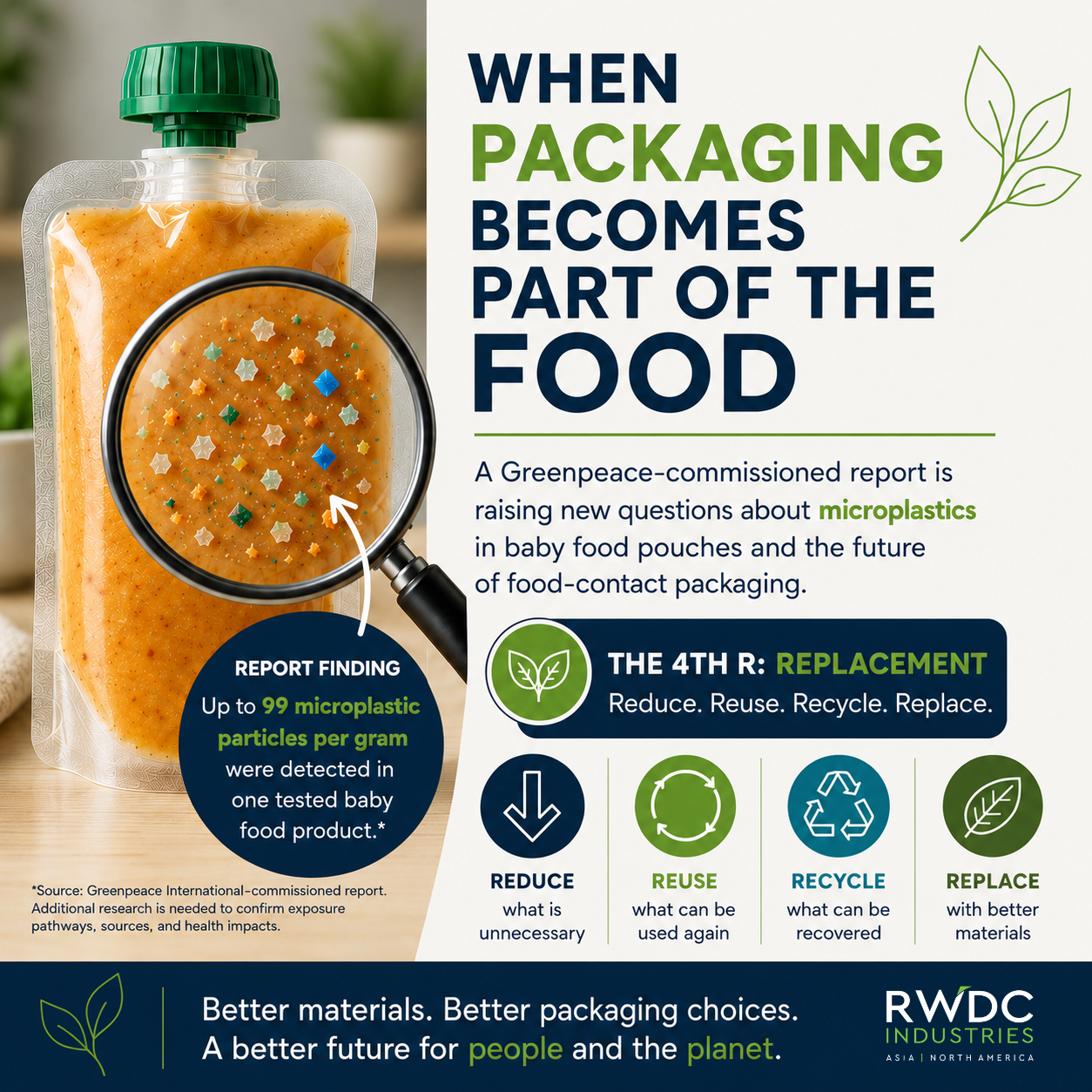
Parents pay close attention to what goes into their children’s food. They read ingredient labels, compare nutrition facts, and look to brands they trust. But a new report is raising a different kind of question. What if the packaging itself contributes something that doesn't appear on the label? A newly released report commissioned by Greenpeace International has brought renewed attention to baby food sold in flexible plastic squeeze pouches. Researchers analyzed two popular baby food products and detected both microplastic particles and plastic-associated chemicals in the food tested. The findings do not prove that packaging was the only source of microplastics in the products. The researchers acknowledged that some particles and chemicals could have come from other points in the manufacturing or processing chain. But the report does add to a growing body of concern around plastic food-contact materials and the role packaging may play in microplastic exposure. What the Study Found The research examined two baby food products packaged in flexible plastic pouches. Independent laboratory testing by SINTEF Ocean in Norway, detected microplastics in both products. According to the report, researchers found up to 54 microplastic particles per gram of food in one product and up to 99 particles per gram in the second product. The study estimated that individual pouches contained more than 5,000 and 11,000 microplastic particles, respectively. The laboratory also identified plastic-associated chemicals in both the packaging materials and the food itself. The study does not establish a direct source for every particle or chemical detected. That distinction matters. Food products can encounter plastics and other materials at multiple points before they reach the consumer. Still, researchers noted that polyethylene was among the most frequently identified materials in the samples analyzed. Because polyethylene is commonly used as an interior layer in flexible pouch packaging, the findings raise important questions about whether some particles may be linked to the packaging system itself. That question deserves more research. It also deserves serious attention. Why This Matters for Infants Infants and young children are not simply smaller adults. They eat and drink more relative to their body weight, and their bodies are still developing. Scientists are still working to understand the long-term health implications of microplastic exposure. But concern has grown as microplastics have been detected in human blood, lungs, placentas, and other tissues. That does not mean every exposure creates a known health outcome. It does mean that reducing unnecessary exposure is a reasonable goal, especially when children are involved. Food packaging is supposed to protect what we consume. It should not become part of what we consume. The Bigger Packaging Conversation Flexible plastic pouches have become common in the baby food market because they are lightweight, portable, and convenient. For busy families, that convenience is easy to understand. But convenience often comes with a material tradeoff. Many flexible pouches are made from multiple layers of plastic and foil. That structure helps protect the product inside, but it also makes the packaging difficult or impossible to recycle through conventional systems. Once discarded, these materials can persist in the environment, fragment over time, and contribute to the broader microplastics challenge. That is why this conversation cannot stop at one study, one product category, or one brand. The larger issue is material design. Can we deliver the safety, convenience, and performance people expect without relying so heavily on persistent plastic materials that can remain in the environment for decades or centuries? At RWDC, we believe that question belongs at the center of the packaging conversation. The Fourth R: Replacement For decades, plastic waste solutions have been framed around three familiar principles: Reduce, Reuse, and Recycle. Those principles remain important. We should reduce unnecessary consumption. We should reuse products where reuse makes sense. We should recycle materials that can be effectively recovered and returned to productive use. But microplastics expose a challenge the original Three Rs were not designed to fully address. Reduce, Reuse, and Recycle largely focus on what happens after a product has already been made. Microplastics force us to ask an earlier question. Should a persistent plastic have been used for this application in the first place? That is where the Fourth R comes in: Replacement . Replacement does not mean every plastic should disappear from every application. Some uses require durability, longevity, and specific performance characteristics that conventional plastics can provide. But many single-use and short-lived products are different. They are designed to be used briefly, discarded quickly, and recovered inconsistently. In those applications, material choice matters. Replacement asks whether persistent plastics can be substituted with materials designed to perform during use and return more safely to natural systems at the end of their useful life. That is not waste management. It is pollution prevention by design. Where RWDC Fits RWDC is focused on that material challenge. Through Solon ® PHA polymers, RWDC is developing materials designed to provide the functionality consumers and brands expect while offering a fundamentally different environmental profile from conventional plastics. Solon PHA is produced from renewable resources and designed to biodegrade across a wide range of natural environments. Unlike conventional plastics that can persist and fragment into microplastics over time, PHA materials are designed to return to natural systems through biological processes. That difference matters. As concerns around microplastics continue to grow, brands, policymakers, and consumers are asking better questions about the materials used in everyday products. Packaging is no longer just about shelf life, convenience, and cost. It is also about what happens when that package leaves our hands. The future of sustainable packaging will require better design, better recovery systems, and better material choices. No single solution will solve the microplastics challenge. But for applications where persistent plastics create lasting environmental and human-health concerns, Replacement must be part of the conversation. Reduce what is unnecessary. Reuse what can be used again. Recycle what can be recovered. But where persistent plastics are likely to escape collection systems, enter natural environments, or contribute to microplastic formation, the better answer may not be managing them more effectively. It may be replacing them altogether. That is the Fourth R.  This article references Greenpeace International’s report on microplastics and plastic-associated chemicals detected in baby food sold in flexible plastic pouches. The study’s findings point to the need for additional research into exposure pathways, health impacts, and the role packaging may play in introducing microplastics into food products.
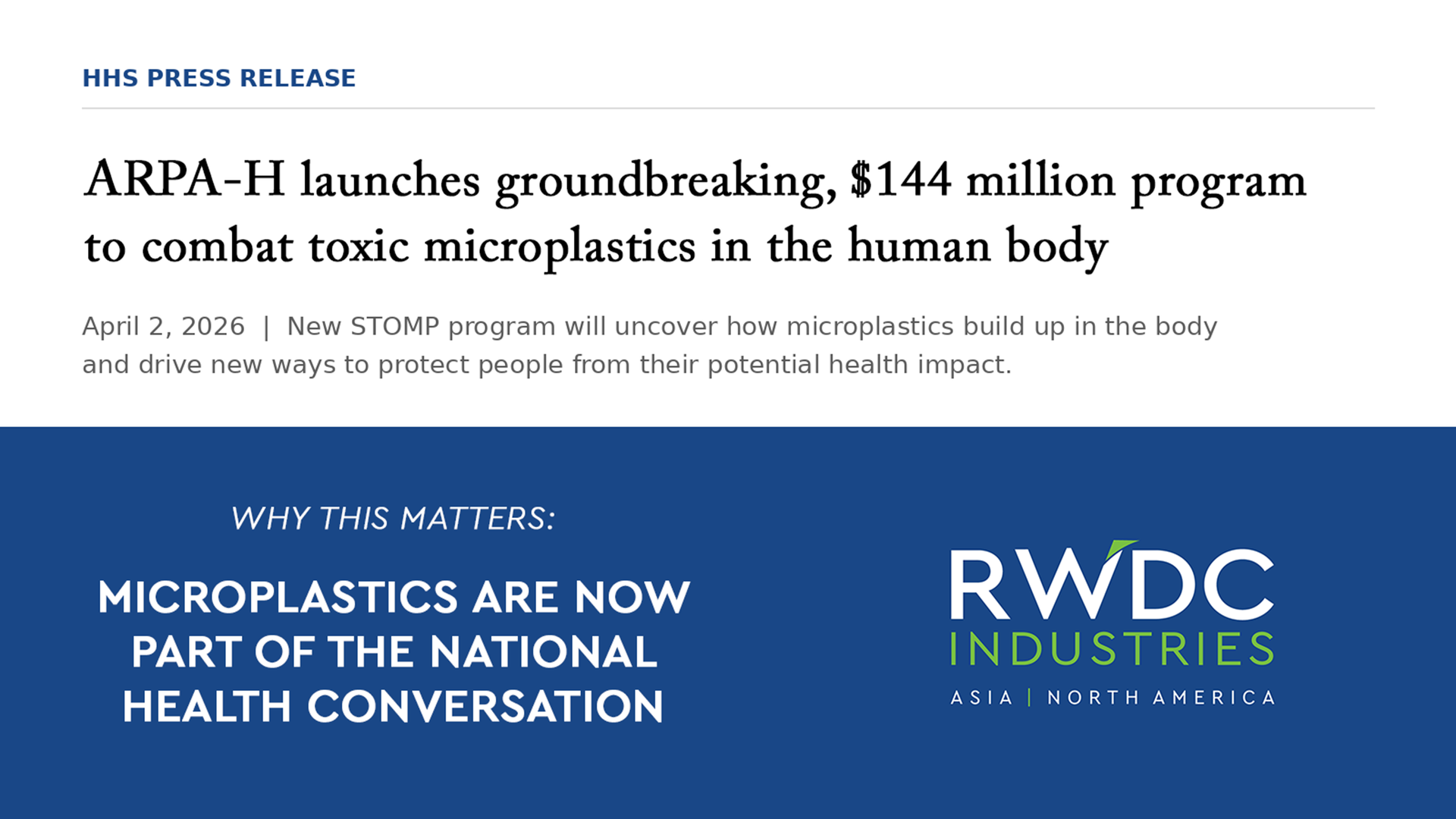
By RWDC Industries Admin April 2, 2026
This is a subtitle for your new post
December 19, 2025
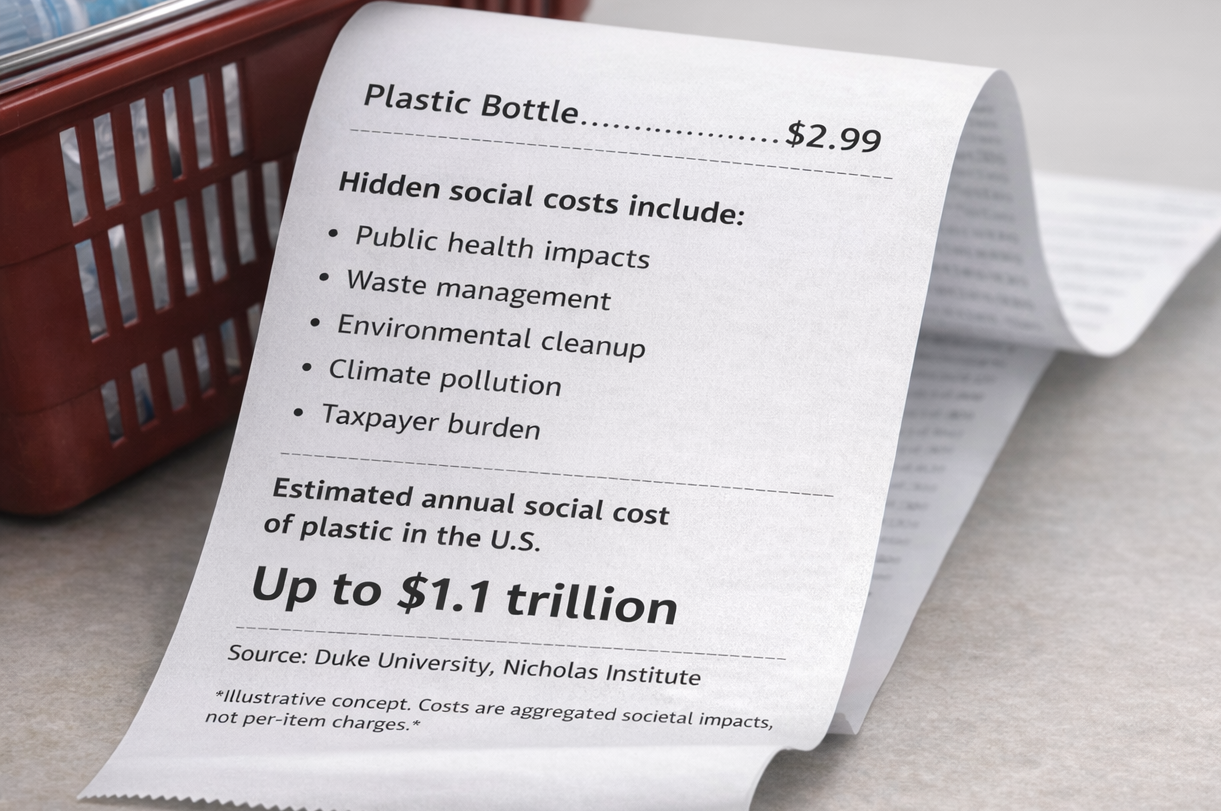
Plastic is often described as cheap, convenient, and efficient. At checkout, it looks that way. But new research makes clear that plastic is only cheap because its real costs are being paid somewhere else. A recent report from Duke University’s Nicholas Institute for Energy, Environment and Sustainability estimates that the social cost of plastic in the United States alone reaches as high as $1.1 trillion every year . That figure reflects the accumulated impacts of plastic across its entire lifecycle, from fossil fuel extraction and manufacturing to public health, environmental damage, waste management, and climate pollution. The researchers emphasize that this estimate is likely conservative, noting significant data gaps that make it difficult to fully capture plastic’s true toll. A Broader Way to Account for Plastic’s Impact This concept of “social cost” reframes the plastic conversation. It moves the issue beyond recycling rates and litter and toward a more honest accounting of who ultimately pays. The price printed on a product does not include the health care costs associated with toxic exposure, the taxpayer dollars spent managing plastic waste, or the long-term environmental damage linked to plastic production and disposal. That message came through clearly in a recent episode of NRDC’s What the Earth? where Margie Kelly spoke with Renée Sharp, NRDC’s director of plastics and petrochemical advocacy. Sharp connected the Duke findings to everyday life in direct terms. “Plastic is fake cheap,” Sharp said. “It looks cheap. It seems cheap. It is not cheap. The real costs show up in our health, our communities, and our environment.” The Duke report puts numbers behind that statement. Health related impacts account for a significant portion of the estimated cost, including increased disease burden, lost productivity, and premature deaths linked to pollution and chemical exposure. Environmental contamination, climate emissions from fossil fuel-based plastics, and the cost of cleanup and waste management add hundreds of billions more. When Plastic Pollution Becomes Personal What makes this moment different is where the science is now pointing. Researchers have detected microplastics in human blood, lungs, placental tissue, arterial plaque, and brain tissue. Plastic pollution is no longer something that exists only in oceans or landfills. It is now inside the human body. Sharp addressed that shift directly in the interview, noting that people did not consent to this exposure. Plastic was marketed as a miracle material, she explained, without any warning that it would fragment into microscopic particles that end up in our air, water, food, and organs. This growing body of evidence is changing how plastic is perceived across political and cultural lines. Public concern is expanding beyond aesthetics and waste toward human health and long-term societal cost. The Duke analysis provides policymakers, businesses, and communities with a framework to evaluate plastic not by convenience alone, but by its real impact on people and systems. If plastic were priced honestly, the market would look very different. Until then, understanding the social cost of plastic is a critical step toward safer materials, smarter policy, and choices that put human health first.
November 21, 2025
Another major report on microplastics just landed in California, and it underscores exactly why RWDC exists. The products people use every day are shedding microscopic plastic particles into the air we breathe and the food we eat. The solution isn’t more filters, warnings, or end-of-life fixes. It’s better materials, designed from the start to protect human health. Another Day, Another Disturbing Report California’s Department of Toxic Substances Control (DTSC) released its latest overview of microplastics in consumer products, and the findings confirm what researchers, health advocates, and early movers like RWDC have been emphasizing for years: exposure isn’t occasional, incidental, or tied to a single product category. It’s structural. It’s routine. And it’s happening inside homes, schools, restaurants, and workplaces every day. The report tracks how familiar items shed microplastics through ordinary use. Baby bottles made from polypropylene release particles when heated or shaken during formula preparation. Plastics used in food packaging — from beverage bottles and caps to cling films, snack wrappers, and polystyrene takeout containers — shed microplastics under heat, friction, and simple mechanical stress. Children’s toys, especially slimes, foams, polymer clays, and glitter-based products, transfer primary microplastics to hands, surfaces, and mouths. Even products most people never consider contribute to this ongoing cycle. Water-based interior paints release microplastics when brushes and rollers are washed out, and dried paint layers shed particles into indoor dust over time. Detergents and fabric softeners rely on polymers and fragrance microcapsules that persist through wastewater treatment and travel into waterways. Agricultural plastic film mulch breaks down directly into soil, affecting everything from microbial communities to crop health. When these pathways converge, the picture becomes impossible to dismiss: microplastics flow into our environment, and our bodies, because the materials at the foundation of consumer products were never designed with human health in mind. They were designed for convenience, cost, and scale. RWDC: Built to Change the Game The encouraging element in DTSC’s findings is its acknowledgment that alternatives already exist. Glass, stainless steel, cellulose, mineral-based materials, paper systems, and genuinely biodegradable biopolymers, including PHA, offer realistic, high-performance options that do not leave behind persistent particles. These are not hypothetical materials. They are commercially viable today. What’s needed now is commitment — from regulators, manufacturers, and brands who understand that the era of microplastic-dependent product design is ending. California’s report will influence which products are designated as “Priority Products,” triggering reformulation requirements and accelerating the shift to safer materials. Globally, the movement is already gaining traction, with the European Union phasing out several categories of intentionally added microplastics by 2029. Time for Action The momentum is real. The science is clear. And the opportunity is enormous. Microplastic exposure may be a daily reality, but it doesn’t have to be our future. RWDC is leading the shift toward materials that protect human health and return safely to the earth. It’s the only path forward where the products we rely on add value to our lives without leaving a permanent trace.
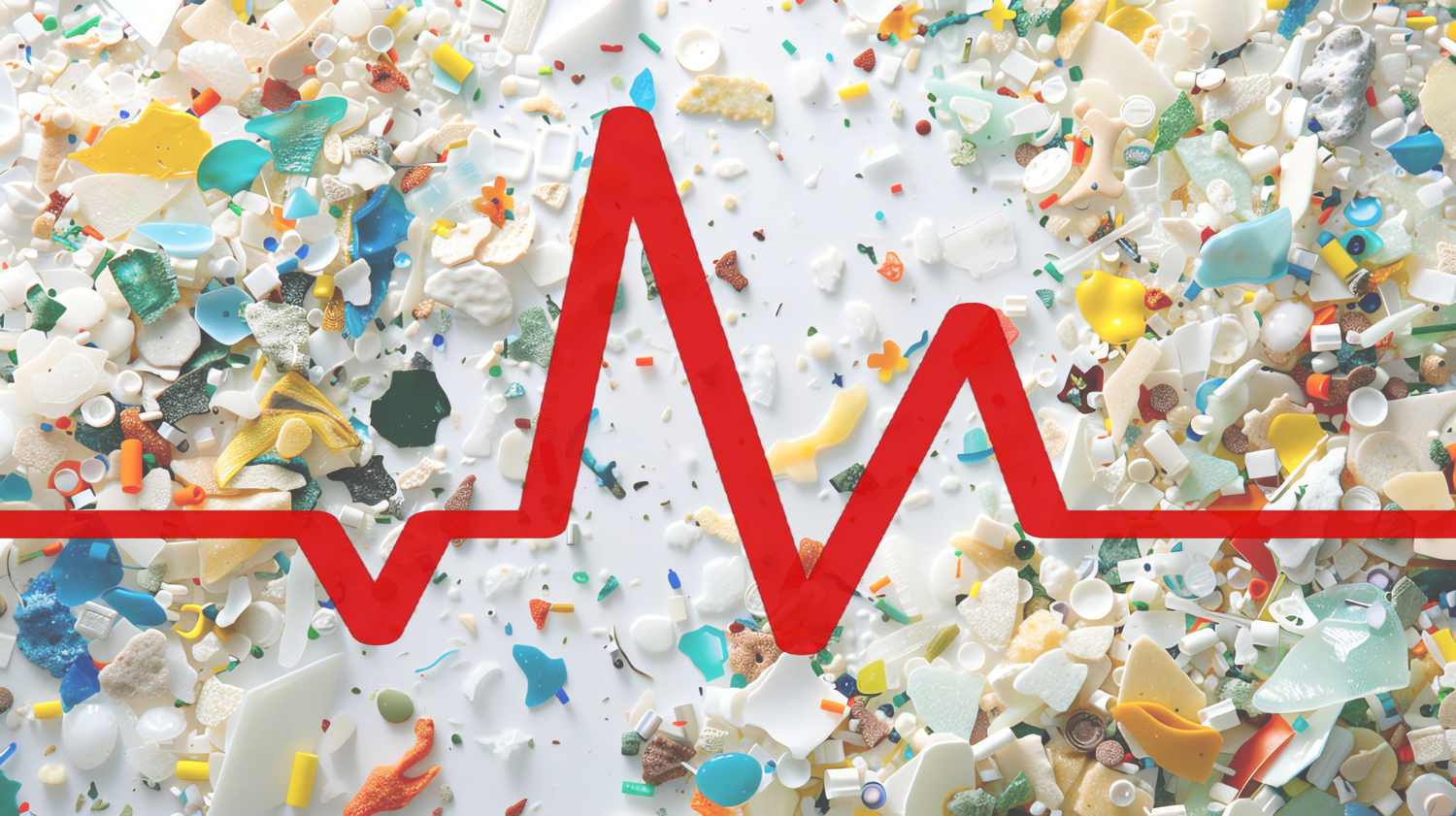
EKG Heartbeat line over thousands of pieces of microplastics
February 10, 2025
Recent groundbreaking research published in the New England Journal of Medicine has revealed a disturbing connection between microplastics and cardiovascular health. The study found that patients with microplastics in their arterial plaque faced 4.5 times higher risk of heart attack, stroke, or death compared to those without plastic particles present. This research, conducted in Italy, examined plaque removed from 257 patients' carotid arteries. A striking 58% of samples contained measurable amounts of polyethylene and polyvinyl chloride - common plastics found in everyday items. These findings underscore the urgent need for alternatives to traditional plastics that won't break down into harmful microplastics. Path Forward As Dr. Philip Landrigan noted in his editorial accompanying the study, "inaction is no longer an option." The evidence is clear: The convenience of traditional plastics comes at a cost far higher than previously understood . The development of truly biodegradable materials has become crucial for both environmental and human health. Commitment to Change At RWDC Industries, we're addressing this critical health and environmental challenge through innovative PHA (Polyhydroxyalkanoate) technology. Unlike traditional plastics that fragment into harmful microplastics, PHA completely biodegrades in natural environments, leaving no toxic trace. Working with global brand owners, we're developing PHA-based materials that meet the rigorous standards of consumer products while ensuring environmental and human safety. Our commitment goes beyond creating eco-friendly alternatives – we're working to eliminate the very source of microplastic pollution. Through innovation and commitment to sustainability, we're helping create a future where plastic pollution – and its health implications – are a thing of the past.
June 5, 2024
Strategic investment accelerates development of the first commercial-scale PHA facility, driving global adoption of eco-friendly plastics to mitigate environmental and health concerns
May 15, 2024
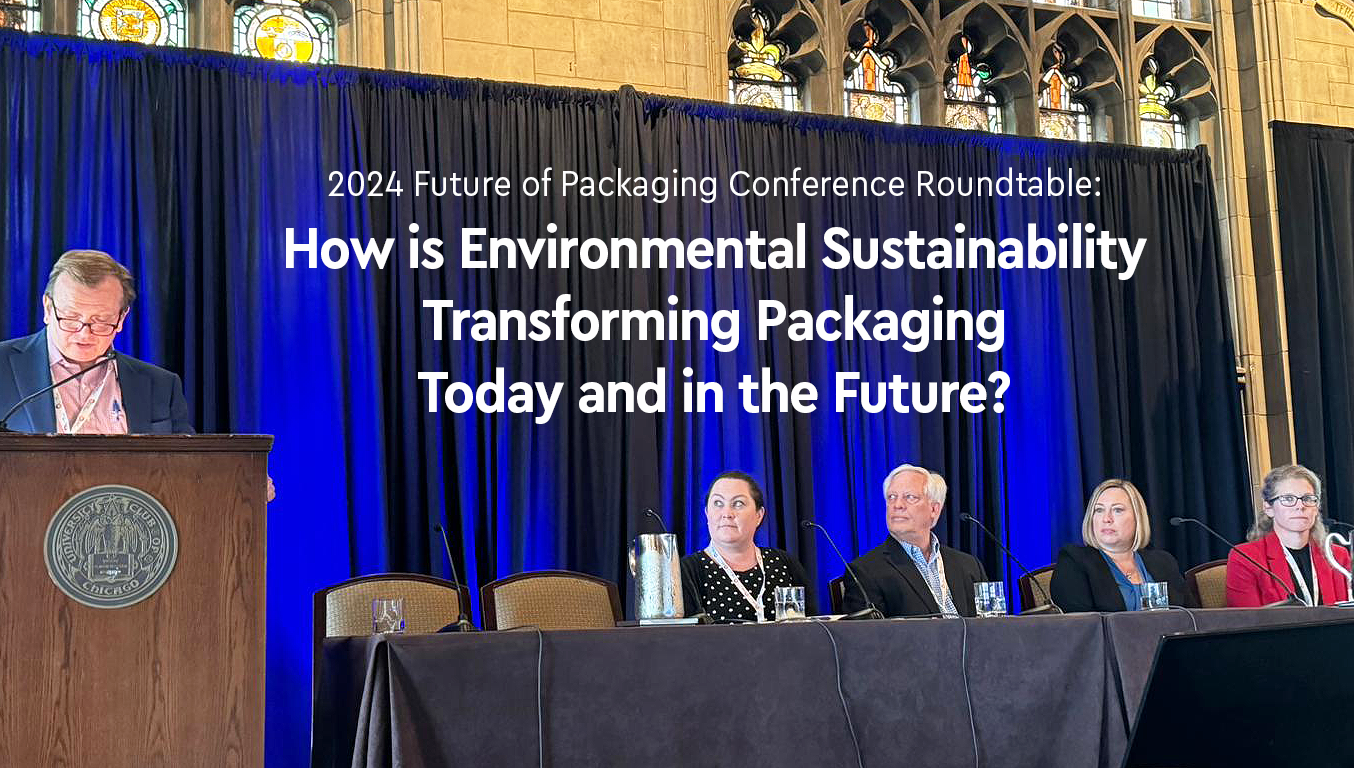
Dr. Daniel Carraway, Co-Founder and CEO of RWDC Industries, recently participated in the "How is Environmental Sustainability Transforming Packaging Today and in the Future?" panel at the Future of Packaging Conference. The panel discussion focused on the urgent need to address the global microplastics problem and the role of sustainable packaging solutions in mitigating the environmental impact of plastic pollution. During the panel, Dr. Carraway emphasized that while recycling is an important aspect of managing plastic waste, it alone is not sufficient to solve the crisis. In fact, recent studies have shown that recycling processes can contribute to the generation of microplastics, which can then enter the environment and pose significant risks to human health and ecosystems. Dr. Carraway highlighted the potential of PHA (polyhydroxyalkanoates) as a game-changing solution for replacing petroleum-based plastics. PHA is a 100% natural, biodegradable polymer that can be used to create a wide range of packaging products, from rigid containers to flexible films. Unlike traditional plastics, PHA can biodegrade in various environments, including soil, water, and marine settings, without leaving behind harmful residues. The panel also discussed the importance of collaboration among stakeholders, including global brand owners, legislatures, and single-use plastic manufacturers, to accelerate the adoption of sustainable packaging materials like PHA. Dr. Carraway emphasized that by working together, we can drive the transition away from conventional plastics and create a more sustainable future for packaging. RWDC Industries is at the forefront of this transition, developing a large-scale PHA production facility and partnering with global brands to develop eco-friendly packaging solutions. With the increasing awareness of the environmental and health impacts of plastic pollution, the demand for sustainable alternatives like PHA is expected to grow significantly in the coming years. As we move towards a more sustainable future, it is crucial to recognize that recycling alone is not the answer. By embracing innovative materials like PHA and working collaboratively to drive change, we can significantly reduce the global microplastics problem and create a cleaner, healthier planet for generations to come.
September 5, 2023
Next phase of partnership will increase global availability and adoption of natural alternative to petroleum-based plastics
July 18, 2023
Combined expertise will accelerate scale-up of sustainable materials production to reduce global reliance on single-use, petroleum-based plastics
June 9, 2023
Members of RWDC Industries were invited by the United States delegation to attend the second session of the United Nations Intergovernmental Negotiating Committee on Plastic Pollution (UN-INC2) last month in Paris. Over 1500 delegates were granted access to the general sessions, while more than 3000 additional attendees were on hand to meet with delegates. During a stakeholder session, RWDC Chief Commercial Officer Blake Lindsey presented to the US delegation and Larke Williams, the Lead Plastic Pollution Negotiator at U.S. Department of State, a general overview on polyhydroxyalkanoates (PHA) and its benefits. “Attending these events allows us to help create awareness about the value of PHA,” said Lindsey. “RWDC is playing a major role in supporting industry efforts to clarify what PHA is and what it isn’t.” In addition to attending the stakeholder session, RWDC also met with representatives of the United States Department of Agriculture (USDA), the United States Department of Energy (DOE), and members of the White House staff. RWDC is assisting PHA industry leaders like fellow UN-INC2 attendees Dr. Bryan Haynes, of Kimberly-Clark, and Anindya Mukherjee, co-founder of GO!PHA, to help educate and raise awareness about the benefits of PHA so global government officials understand the impact it can have as a replacement for single-use, petroleum-based plastics. “It is important for global policymakers to understand the differences between petroleum-based plastics and biobased alternatives, why replacing is more important than recycling, and why biobased alternatives should not be left off acceptable materials lists supported by government agencies,” said Lindsey. In addition to attending important industry event, RWDC also has joined INDA, the Association of the Nonwoven Fabrics Industry, following an invitation from Kimberly-Clark, meeting with INDA officials during UN-INC2 to further enhance industry exposure. RWDC also has been invited to join The Business Coalition for a Global Plastics Treaty as a result of discussions at UN-INC2. The Business Coalition for a Global Plastics Treaty brings together businesses and financial institutions committed to supporting the development of an ambitious, effective, and legally binding UN treaty to end plastic pollution. The coalition is convened by the Ellen MacArthur Foundation and WWF, in collaboration with aligned businesses and supported by strategic NGO partners. Representatives of this NGO attended the UN-INC2, including government relations representatives for Walmart, PepsiCo, and Coca Cola. We will continue to forge these important relationships until governments, policymakers, lobbyists, global brand owners, and consumers see PHA as THE solution to the global plastic crisis.